You sit down to help one child with math, and the other asks what to do next. You find them a reading assignment, then discover the book is still in yesterday’s bag. By the time everyone has what they need, the lesson you planned to do together is already running late.
A homeschool schedule for multiple kids works best when it answers three questions before you start: What can we do together? Who needs my help first? What can everyone else do while I’m helping?
Below is a sample schedule for two children working at different levels. You can use it even if your children wake at different times, you split teaching with another caregiver, or your most reliable stretch of time happens after lunch.
1. Give your day three predictable starting points

Pick three moments that can happen in roughly the same order on most homeschool days. Tie them to things your family already does, such as clearing breakfast dishes, coming back from a walk, or getting ready for lunch.
- Start together. Gather your materials, tell everyone what’s happening first, and begin with something familiar. This could be a read-aloud, a short conversation, or five minutes reviewing the day.
- Make time for individual lessons. Decide which child will work with you first and what the other child can start independently.
- Wrap up. Put away materials and name one thing to pick up next time. If you keep learning records, this is a good moment to write a quick note.
For example, if breakfast ends at different times every day, try “After we clear the breakfast table, we’ll read together.” When breakfast runs late, everyone still knows what comes next.
If your children prefer to know the time, use a window such as “between 9:00 and 9:30” and give a short heads-up when you’re about to start. Try that for a few days before putting times on the rest of your schedule. You may find that only the start and a few fixed commitments need a clock time.
2. Teach one topic together, then give each child a different task
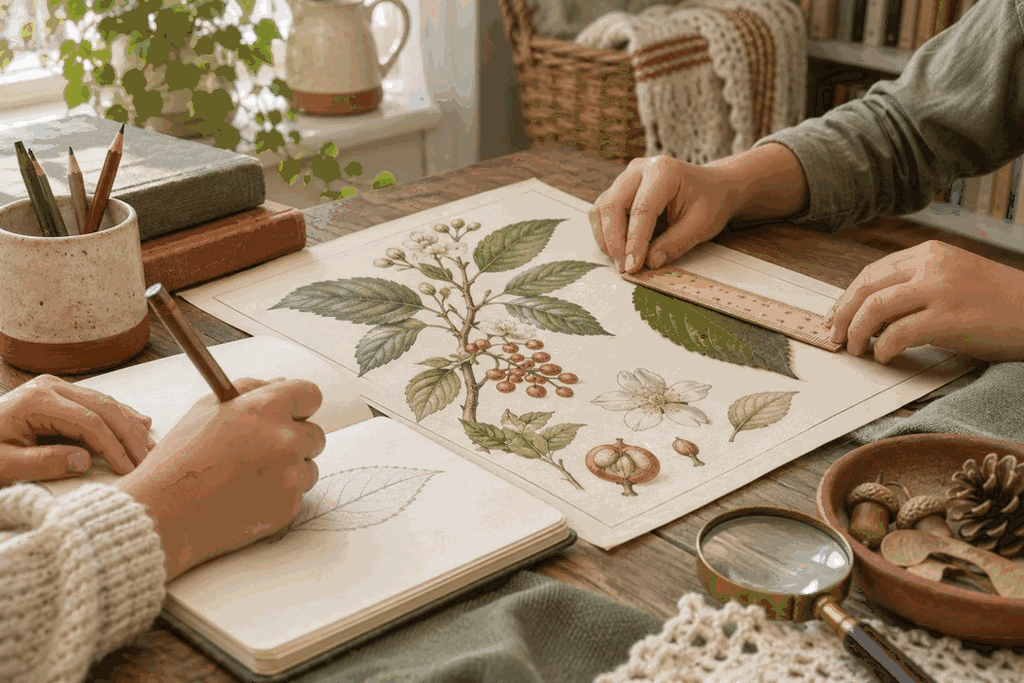
Look through your week for a topic both children can explore. A story, map, science observation, or kitchen activity can give everyone something to talk about. Then choose a follow-up that fits what each child is working on.
| Shared activity | One child might… | Another child might… |
|---|---|---|
| Read a short story together | Draw a favorite scene and describe it aloud | Explain why a character made a particular choice |
| Compare two leaves | Sort them by shape and sketch one | Measure them and explain how their shapes differ |
| Double a recipe | Count the scoops and identify the measuring cups | Calculate the doubled quantities and explain the fractions |
| Look at a neighborhood map | Identify familiar landmarks | Compare two routes and explain which they would take |
Give each child one clear finish line. For the leaf activity, that might be “Draw one leaf and point out two things you noticed” or “Measure both leaves and write one sentence comparing them.” A clear stopping point helps each child finish while you’re working with someone else.
Keep individual lessons for skills that need direct attention at each child’s level. You might explore the same science topic together and still teach decoding, spelling, or fractions separately.
3. Plan the work children can do while they wait for you
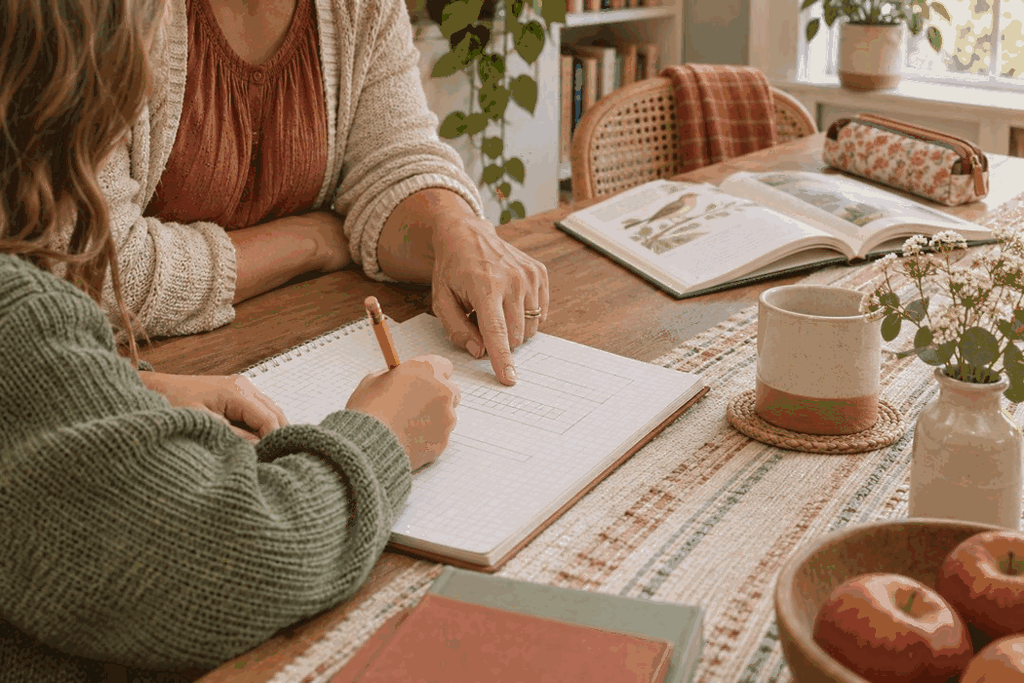
Before setting a one-on-one lesson, decide what the other child will do during that time. Pick a task they can start, continue, and finish with materials they already know how to use. A familiar assignment is especially helpful when you’re introducing a difficult concept to another child.
| Order | Parent | Child A | Child B |
|---|---|---|---|
| Start together | Read aloud and introduce the day | Listen or sketch | Listen and discuss |
| First turn, 15 minutes | Teach a new math skill | Work with parent | Read a familiar book, then mark a page to discuss |
| Short reset | Put away math materials | Take a movement or snack break | Take a movement or snack break |
| Second turn, 15 minutes | Review a writing draft | Sort picture cards using a familiar rule | Work with parent |
| Wrap up | Note each child’s next step | Put away materials | Put away materials |
Set out the materials before the first turn. Tell each child what to do if they finish early or get stuck. For example: “If you finish, choose a book from the basket. If you get stuck, mark the spot and move to the next question. I’ll come over when the timer ends.”
If both children need you to get started, begin with two minutes together. Open the books, read the first direction aloud, and ask each child to show you what they’ll do first. For a child who’s still learning to work independently, try five minutes before stretching the turn to fifteen.
4. Build a weekly schedule with room to move things
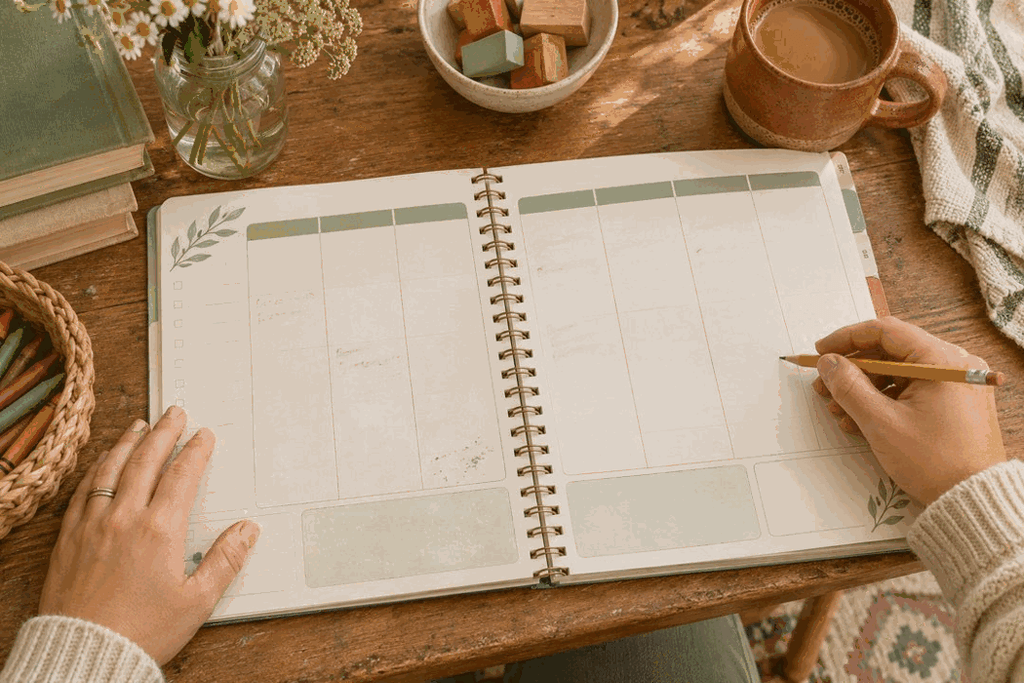
When you’re planning for two or more children, one late appointment can move several lessons at once. Start your weekly plan with commitments that already have a time. Then write down one or two learning priorities for each child and place those where you’re most likely to have the time and attention for them.
Here’s how one family might organize the main teaching block:
| Day | Shared activity | Child A’s priority | Child B’s priority |
|---|---|---|---|
| Monday | Read the first chapter together | Practice a new spelling pattern | Outline a written response |
| Tuesday | Compare leaves from a walk | Review addition facts | Measure and record observations |
| Wednesday | Read the next chapter | Read a short passage aloud | Draft the written response |
| Thursday | Double a recipe | Practice measuring | Compare and explain fractions |
| Friday | Share something from the week | Finish one priority or review | Finish one priority or revise |
Use Friday’s open time to finish one priority per child if the week runs long. If Tuesday’s walk gets rained out, you can move it or use leaves from home. There’s no need to shift every other lesson just to keep the original order.
It also helps to decide what a short homeschool day looks like before you need one. For your family, that could be a shared read-aloud, ten minutes on a priority skill with each child, and a quick note about where to resume. Write that version at the bottom of your weekly plan so any caregiver can pick it up.
If you’d like tools for organizing shared lessons and individual priorities, visit Homeschool Mosaic Resources to see what we’re developing.
5. Keep a short learning record and adjust one thing each week

At the end of the day, write one line per child when there’s something worth carrying forward. Focus on what they did, what you noticed, and what you’ll try next. A notebook, spreadsheet, or the back of your weekly plan all work.
| Child | What we did | What I noticed | Next time |
|---|---|---|---|
| Child A | Read a short passage aloud | Needed help starting but reread the last line independently | Reread the same passage before choosing a new one |
| Child B | Drafted a paragraph about the read-aloud | Included a clear example but left out the main point | State the main point aloud before revising |
On Friday, scan the notes alongside your schedule. If the independent work kept getting interrupted, check whether the task was familiar enough to do alone. If one child regularly waited too long for help, swap the order of the one-on-one turns. Change one thing for the next week so you can see whether it helped.
Start with tomorrow. Choose one shared activity, one priority for each child, and one familiar task each can do while waiting for you. Afterward, jot down where everyone got stuck or what they were ready to do next. That gives you a concrete starting point for the rest of the week.
For future planning and record-keeping tools, see Homeschool Mosaic Resources.